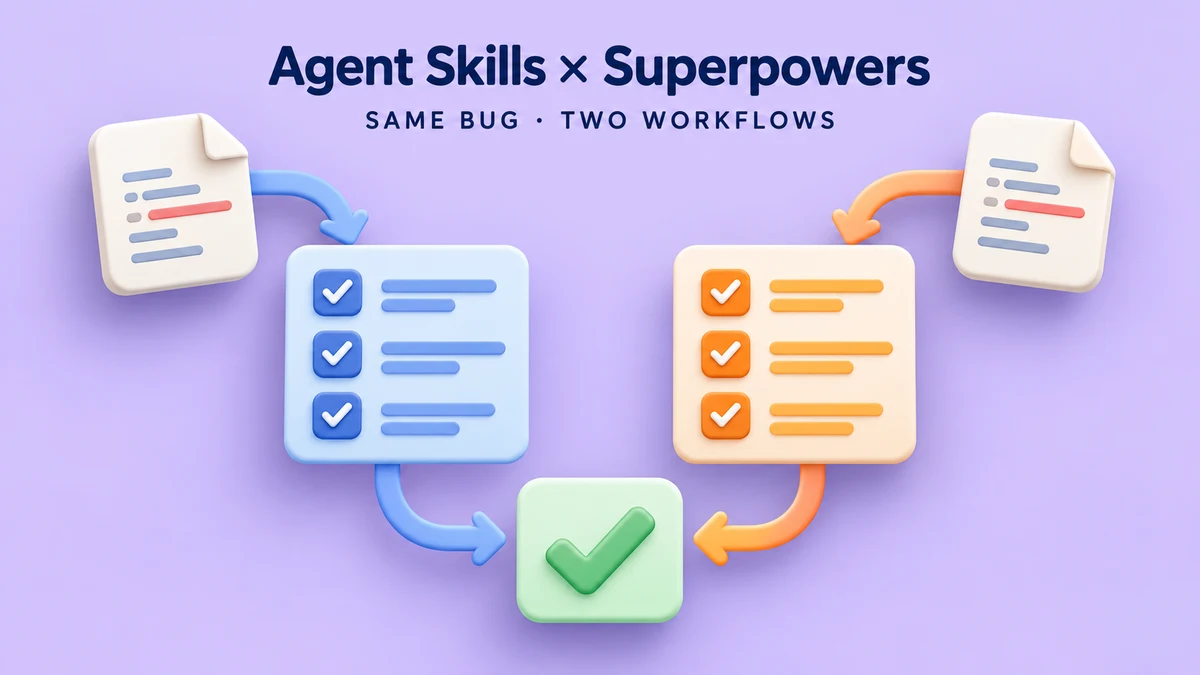
- Use prompts for this request and skills for recurring procedures.
- Plugins package components; MCP connects clients to server-provided tools and data.
- Check discovery, invocation and factual correctness separately.
Tested on 16 October 2026 using Windows and Claude Code CLI 2.1.301. We loaded our own meeting-kit plugin for individual sessions and invoked brief and facts with Korean input. This plugin contains no MCP server. No new external account was connected. English prompts and input are editorial adaptations, not separate executions.
Files for this exercise
AIHotple example files and prompts. Try the exercise before substituting real work data.
One memo, two useful outputs
A fictional library workshop needs a two-sentence customer notice and an internal fact table. We created brief and facts skills, put both in one meeting-kit plugin and actually invoked each. The memo was already in a local folder and could be read with Claude Code’s Read tool. No external connection was needed. This makes the differences concrete without installing a collection of unrelated extensions.

The four terms describe different jobs
This comparison uses Claude Code’s documented structure. Other products use related terms but do not necessarily share its manifest format, paths or commands. Do not treat these plugin files as a universal ChatGPT or Codex installation recipe.
| Layer | Job in this exercise | Useful when |
|---|---|---|
| Prompt | Choose this memo, audience and length | You need one output |
| Skill | Save reading, extraction and missing-data rules | You repeat the procedure |
| Plugin | Package brief and facts together | You share the same configuration |
| MCP | Connect a client to server-provided tools/data | The required source needs an external tool or service |
Start with the request before packaging it
A prompt can already ask for a grounded notice. Try it first, review mistakes, then put the repeatable procedure into SKILL.md while keeping each input variable. Our brief uses $ARGUMENTS for the file and disable-model-invocation: true for explicit user invocation. The linked article covers creating and invoking a standalone project skill.
Read input/workshop-en.md and write a two-sentence customer notice. Preserve date, time, venue, capacity and fee. Keep the registration route unspecified if it is unspecified. Add no links, discounts or promises to announce something later.Put two skills beside the plugin manifest
Extract the ZIP and inspect the tree below. Only plugin.json belongs inside .claude-plugin; skills belongs directly under meeting-kit. The manifest name gives commands their meeting-kit: namespace. A plugin can contain just skills: an MCP server or hook is not mandatory. Our manifest validation passed, then we checked discovery and actual invocation separately.
plugin-practice/
├─ input/workshop-ko.md
└─ meeting-kit/
   ├─ .claude-plugin/plugin.json
   └─ skills/
      ├─ brief/SKILL.md
      └─ facts/SKILL.md
Load the local folder for this session
With Claude Code installed and signed in, enter plugin-practice. Run the first two commands in a terminal, then the slash commands inside Claude. The paths are relative to this directory. --plugin-dir loads a local plugin for that invocation; this exercise did not publish a marketplace entry or permanently install it globally. If commands do not appear, check the manifest name and directory layout, then start a fresh session.
claude plugin validate ./meeting-kit
claude --plugin-dir ./meeting-kit

# Inside Claude, invoke each
/meeting-kit:brief input/workshop-ko.md
/meeting-kit:facts input/workshop-ko.md
What actually happened, including the first mistake
The source specified 14 November 2026, 14:00–15:30, a fictional library room, 12 people, free admission and an unspecified registration route. The first brief retained those facts but added a promise to announce the route later. That was unsupported. We explicitly prohibited future announcement promises in SKILL.md and invoked it again in a fresh run. The revised notice stated only the current unknown.
We also invoked facts and checked its six-field table. Both executions read the memo; neither wrote files. The ZIP contains the actual Korean first notice, revised notice and fact table. The revised notice below is the real Korean response, not an English execution.
| Check | Observation |
|---|---|
| Manifest | Validation passed |
| Discovery and invocation | Both meeting-kit:brief and meeting-kit:facts |
| Revised notice | Known facts retained; registration left unspecified |
| Fact table | Six fields; no invented registration route |
| Boundary | Local Claude Code and Korean input; other products and English execution untested |
기록모임이 2026년 11월 14일 14:00~15:30에 모아도서관 2층 모임방(가상)에서 열리며, 정원은 12명이고 참가비는 무료입니다. 신청 경로는 현재 미정입니다.Add MCP when access to the source is the missing piece
A local memo did not require MCP here. A service-hosted memo may require a service-specific connection, account authorization and permission to the document. Packaging a plugin does not grant those permissions. Check a real tool call and a distinctive piece of permitted source content, not only a Connected badge. Filesystem MCP can also expose writing tools, so MCP itself is not inherently read-only.
Stop at the layer that solves your problem
Use a prompt for a one-off notice. Refine a skill when mistakes recur. Package skills when they need to travel together, and investigate a connection when source access is the obstacle. This is a decision path, not a requirement to install every layer. Even a correctly loaded plugin can add unsupported wording; compare the final facts and promises with the original memo.
Sources & verification
Tested on 16 October 2026 using Windows and Claude Code CLI 2.1.301. We loaded our own meeting-kit plugin for individual sessions and invoked brief and facts with Korean input. This plugin contains no MCP server. No new external account was connected. English prompts and input are editorial adaptations, not separate executions.
Sources checked: 2026.10.16