- Use one role and a small set of facts you can defend.
- Ask for one question per turn and a clear handoff phrase.
- Keep the actual counts when you revise your answer.
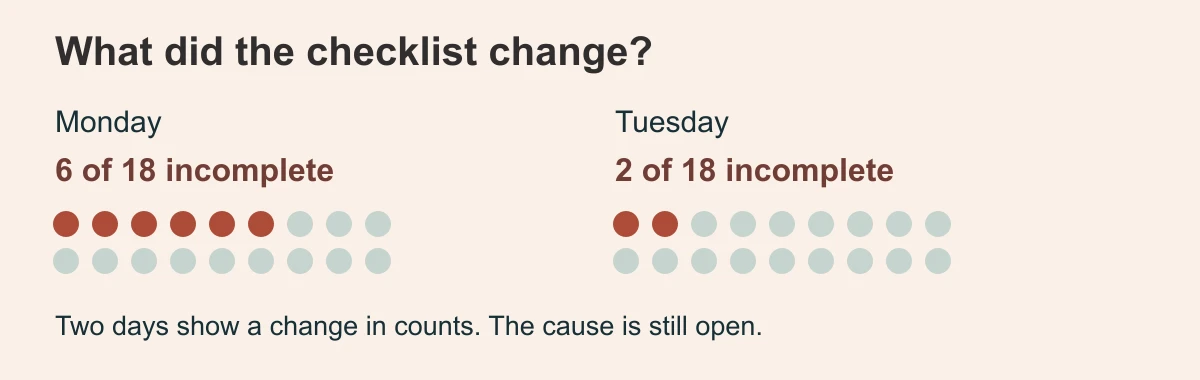
“I improved our intake process” invites a polite follow-up. “Six out of eighteen forms were incomplete on Monday, and two out of eighteen on Tuesday” gives an interviewer something to challenge. Use that difference to rehearse an answer you could defend in a real interview.
Files for this exercise
AIHotple example files and prompts. Try the exercise before substituting real work data.
Set up a three-question rehearsal
Open a new Chat in ChatGPT and paste the interview brief below. On web or mobile select the Voice icon beside the message box. In the web session we checked, the composer offered both voice input and a separate control to start a voice conversation. Choose the conversation control for spoken replies. OpenAI documents microphone permission on first use and mute and exit controls during the call.
Set a short objective: one opening answer, one challenge and one next-step question. Use a fictional role or remove employer and customer details. You can run the same exercise in text when speaking aloud is impractical.
Act as the hiring manager for a fictional support coordinator role. The job involves triaging requests, improving intake forms and reporting outcomes. Ask about one process I improved. Ask one question at a time. Wait for “answer complete” before the follow-up. If I pause mid-sentence, let me resume. After three questions, quote one phrase from my answer, identify one unsupported claim, and let me try that answer again.Use a fact card instead of memorizing a script
You coordinate incoming support requests. On Monday, six of eighteen requests lacked details. You introduced a three-field checklist. On Tuesday, two of eighteen lacked details. The brief gives no later observations and no information about the mix of requests.
Try these questions in order: What process did you improve? What else could explain the change? What would you measure next week? Answer in your own words. End each reply with “answer complete.” This is a conversational cue to try. If the assistant talks over a pause, say “I have one detail to add; please repeat just the last question,” or switch to text for that turn.
Listen for a follow-up that changes your answer
In our typed check, we gave ChatGPT the two counts and asked for exactly one question about what they could establish. Its reply was: “Did the three-field intake checklist cause the reduction in requests with missing details, or could other factors have contributed?”
A first attempt might be “My checklist solved the problem.” A stronger answer is “I introduced the checklist after six of eighteen requests arrived incomplete. The next day two of eighteen were incomplete. I’d track the rate by request type for another week before attributing that change to the checklist.” Both versions are editorial examples. The second gives the interviewer evidence and an honest next step.
Repeat one answer and score only what you can hear
Ask for a quote from your answer, one missing detail and one follow-up. Reject feedback that adds a customer story, a new metric or a longer test period. Try the answer again without reading the example.
Use the downloadable sheet to mark three things: Did you name your action? Did the counts stay accurate? Did you explain what you would check next? If your version provides a transcript, compare the numbers with your own notes. A transcription error and a weak interview answer need different fixes.
Sources & verification
The support coordinator, job brief and two days of request counts are fictional. We submitted the evidence in a typed ChatGPT conversation and asked for one follow-up. The before-and-after answers and worksheet are editorial examples. Voice controls are documented by OpenAI; spoken behavior can vary by device and account.
Sources checked: 2026.11.07